I am back, baby.
Episode 2: That's the Proof of Our Severance
Magia Record episode 2 opens with a sick ass sequence that represents Iroha's suppressed memories of her sister. The rapid time changing (aw hell nah Iroha done activated the gyatt damn Solar Tablet from Terraria!) concisely conveys both just how long Ui was in the hospital for and gives it a dreamesque feel to it (which makes sense as we see later that this was a dream).
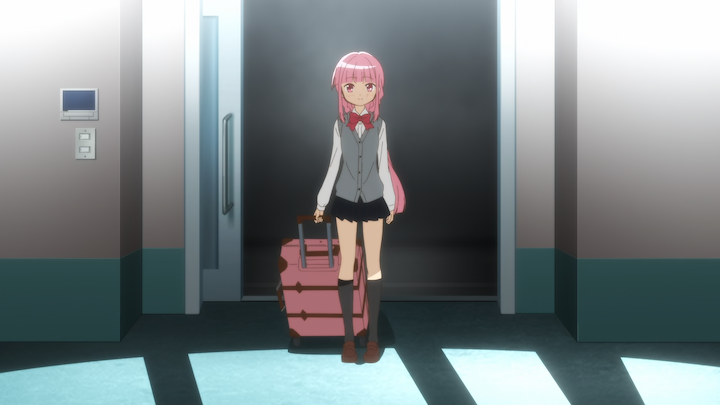
Iroha strolls into the hospital with a full travel suitcase, it didn't stick out to me on first watch, but if you go back to episode 1, you will see that it's the same imagery that is used to portray other magical girls who were led to Kamihama via a dream. The implication being that, despite Iroha having logical reason to want to search for Ui in Kamihama, she is nonetheless influenced by whatever force is behind this subconscious message. It also foreshadows the fact that Iroha's visits to Kamihama will not end on trips solely for information gathering (I also like that Iroha's suitcase is based on her Magical Girl design with the brown leather straps over pink, it's cool).
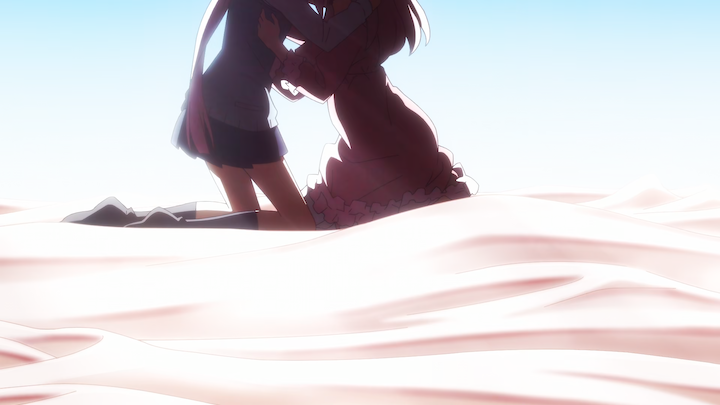
The vast mounds of bed sheets clearly tie into the dream motif, but they are also composed in a way to resemble sand waves in a desert. The dunes allude to the passage of time but in the context of a long and treacherous journey as opposed to how we saw Ui waiting at the window, stagnant. The audience can immediately understand that Iroha will go on a difficult adventure that will change her as a person before she can meet Ui again. As a PMMM fan, you might get a real bad feeling about this…
Iroha rises from the mass of bed sheets she was buried in. In my interpretation, this comes back later in the show as Iroha's tendency to freeze as a trauma response and withdraw from problems into a dream state. In this moment, however, we see her coming out of daydreaming and pretending that everything is fine by indulging in familial activities with her sister to make the decision to form a contract with that little white freak bitch. The show is packed with cool shots that don't hold your hand through each and every bit of visual storytelling. If I had to dig deeper, it is possible that this is also part of the desert theme. A lot of dream interpretation sources say that being buried in sand is symbolic for "feeling overwhelmed, a need for introspection, or a period of transformation". That feels very thematically consistent, but dream interpretations tend to differ from source to source and are mostly based on rational associations (rational associations being the source of most literary symbolisms duh).
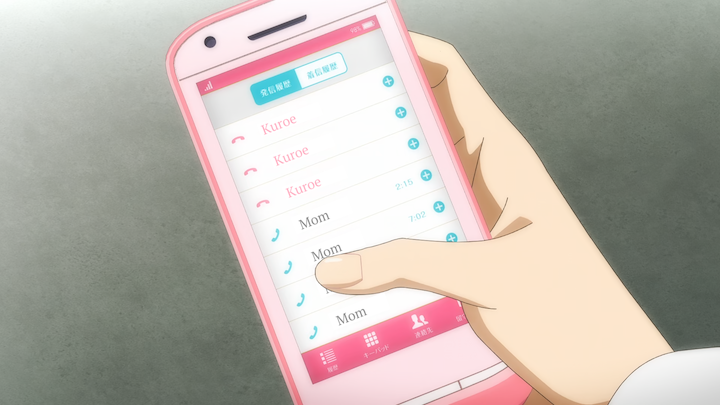
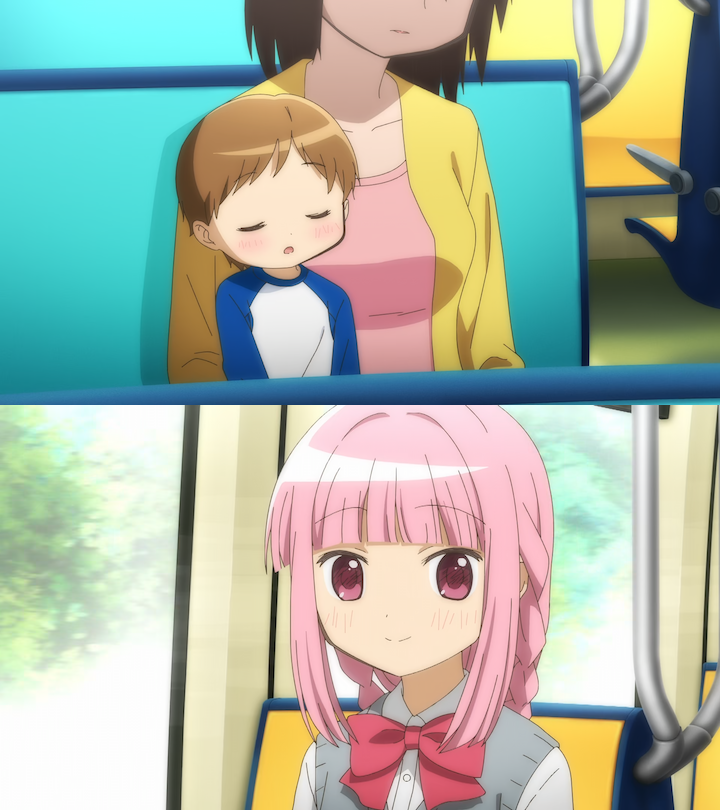
I typically hate all scenes with Kyubey (I honestly think he is such a stupid, worthless character), but this time it actually adds something to the story besides dumping exposition. Iroha talks to Kyubey about her unearthed memories while eating alone, sitting alone at school and ultimately being ignored by Kuroe. I like a lot of glimpses into Iroha's social life before Kamihama that are found in the game, but the anime adaptation is very tasteful with how concisely they portray Iroha being a social reject without having to resort to flashbacks or long inner monologues. It's very smart writing and directing and this portrayal also fits Iroha's personality to not be entirely aware of her loneliness or choosing to ignore it. It's amazing how much we can learn about who Iroha is as an individual with little to no dialogue, making her a great protagonist (though with that said, I do enjoy scenes that happen later in the series where characters talk openly about their feelings, they're neat).
After a scuttle with a witch (OMG... It's Kaede........ the queen of drip). We are finally introduced to Kaede's gang, who swiftly bring Iroha to their local the rapist for magical girls. Mitama is not here yet, sadly, so we are unable to discuss her. There is something to say about the sigil imagery here, but that isn't exclusive to Magia Record. As far as I remember, aside from Madoka's ultimate attack at the end of the original TV series, sigils became a staple in the psp game, but I am not completely sure because I am not that crazy about Madoka (despite how it may seem). I don't care and I don't think anyone reading this will care whether this specific symbol has more meaning to it aside from general reference to real world occultism and magical grimoires. In terms of the story, Iroha stares at it probably because it is the same symbol that appeared when Momoko and Rena used a combined attack (like maybe this has something to do with Mitama??????) If any of my readers want to expand on the sigils in PMMM, feel free to reach out to me and I will gladly shout you out or publish your article on this blog.
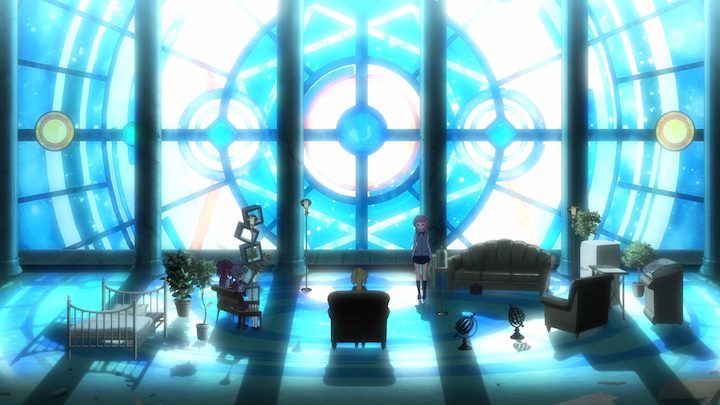
IMPORTANT NOTE: The soundtrack is very good. I was actually going to have a section talking about how interesting it is for Mitama's theme to feature a box organ before realizing that this is definitely an accordion, so my life is ruined, but I will try my best to find a way to stretch a Princess Tutu reference in the future don't you worry. Nevertheless, an accordion is an instrument that is heavily associated with folk music and travelling musicians (the kind of musicians who retold local legends in their performances). It's a cool nod to Mitama's role as the rapist who knows a whole lot more than an average magical girl. Being that we are soon to begin investigating rumors, this might be something the gang should be concerned about.
The next song played over a montage of Iroha not being able to learn anything from the hospital is Kamihama Polyphony. It samples a track from the hospital room toys scene from Akira (Just listen to it side by side, I am not clipping shit). It is cool because I like cool samples. But what's more cool is that this is not the last time we see references to Akira in this series. Obviously, a young child who mysteriously appears to people and disappears and is also stuck at a hospital is an Akira reference. I will not talk about this much further until we get closer to the end of the series (if I will, I might just do season 1, idk). It gives the hospital (and the city at large) an unsettling vibe.
I do appreciate how varied the sound of this show is while still being consistent in itself and with how the audience expects a Madoka series to sound. Takumi Ozawa did an amazing job, in my opinion, even if the tracklist is unfortunately short. I've read that some people online think Yuki Kajiura ghostwrote for the show but if you have heard any of her work outside of Madoka, it is evident that Magia Record OST sounds nothing like that. I probably do not need to go into it too much given that none of my friends require a detailed breakdown of Yuki Kajiura's work. Also, Takumi Ozawa is also like way hotter than Yuki Kajiura, god damn.
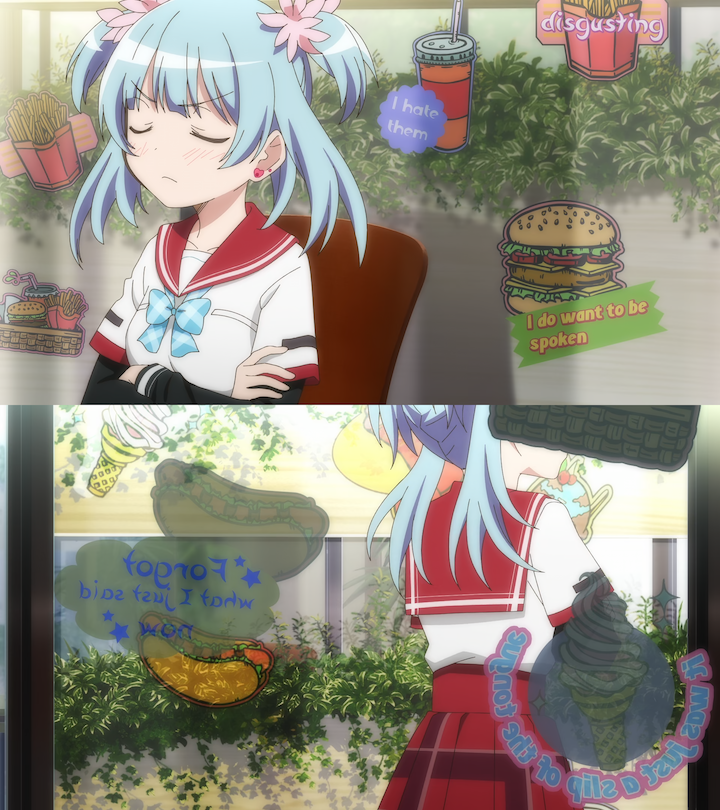
The way that the dialogue is written really resonates with me on a real emotional level. On first watch the audience isn't privy to the state of Rena's mental health so Kaede's comment about her “screwing around” comes across as harmless, at most a jab, later we will learn that Rena is deeply troubled by her relationships with her peers outside of her magical girl team. What I like about it too is that you can see glimpses of it in the background design. Not only do the holographic ads reflect the thoughts of the characters, they actually disappear and change every time the tone of the conversation shifts, punctuating the tension of this stupid argument, and almost making it feel like the world is actually being physically affected by the characters. This whole show has this dream-like quality, which is really cool and neat. Anyway, Momoko is such a nice lady, but she just does not know when to shut the hell up (I feel that). This is about the first time we see a distinct difference in the way she is characterized compared to the source material and, needless to say, I like this version of the character way more as she gives more of a single father vibe.
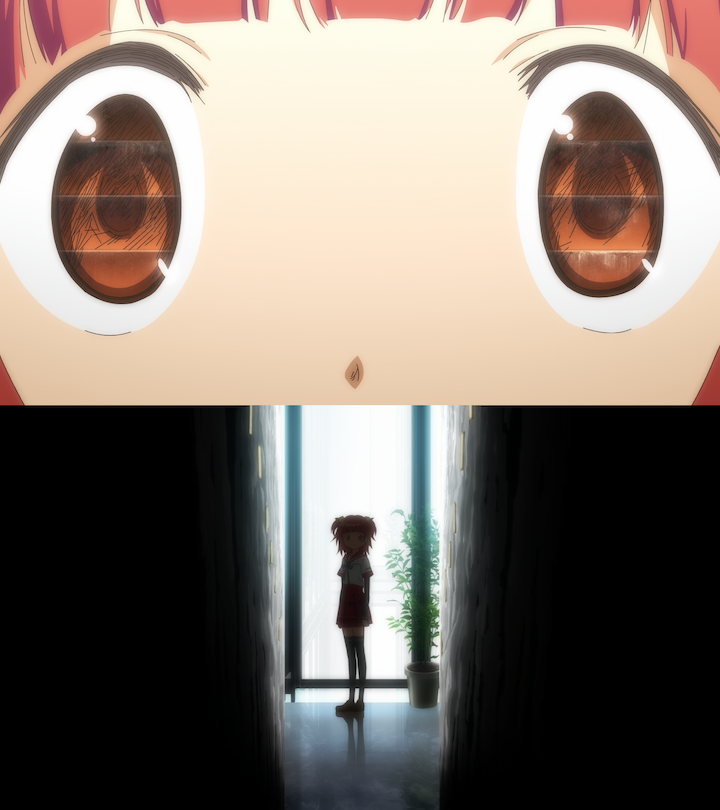
Following Iroha's discussion with Momoko about the stairs rumor, there is a scene of Kaede staring suspiciously at the dubious location in question. She doesn't say anything, but as the audience hears footsteps and sees for just how long Kaede stands there, we understand that she has either seen Rena ascend or otherwise felt like this was a possibility. A nice touch at the end with her classmates calling out to Kaede. Unlike Rena, she doesn't find it difficult to make friends in school, but she still worries about what Rena is going through (Kaede is such a nice girl). What is Rena cooking up? We immediately understand that the implication is she will do something stupid (aka follow the evil rumored ritual), but I think there is also an additional layer to this story.
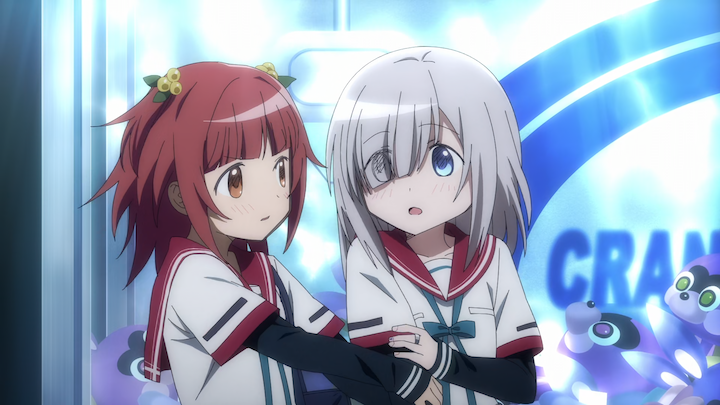
The character that Rena transforms into is Ren Isuzu, it is a character from the original game, which is a nice easter egg for fans, although a more interesting point is that this character also deals with depression and eventually suicidal ideations. In her origin story, Ren attempts to take her own life by jumping off a roof to her death. As we see further, Rena's mental health begins to unravel, so it is possible it is worse than what we initially suspected. It makes me think about how much depth was added to this conflict by introducing the possibility that Rena may not be interested in the steps only because of that rumor.
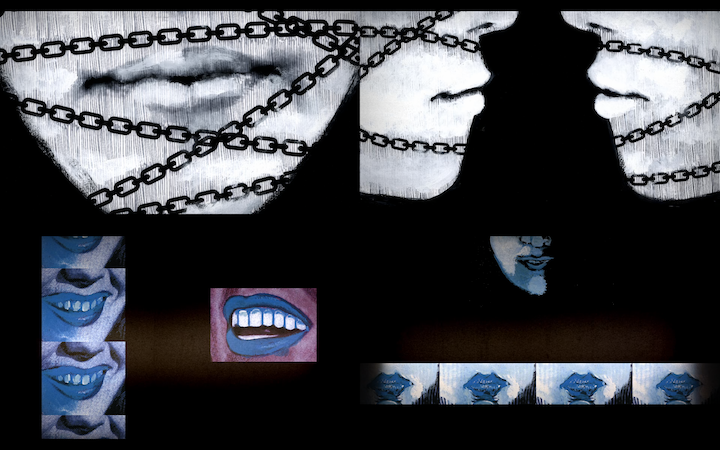
I enjoy the rumors as a plot instrument because it allows curry inu to flex their unique artstyle in more situations, we will see more of it during the witch fights and introductions of the rumors. The striking witch labyrinth design is definitely the most interesting and unique thing about the franchise, so it is a bit of a shame (and is baffling) that they didn't utilize it more than in fight scenes in the original series. There are a lot of really neat illustrations by curry inu you can find online on PMMM wiki and other resources that I recommend checking out.
The biggest plot twist of the episode - not only is Kaede a nice girl, but Rena is also a nice girl. Knowing that Kaede will inevitably apologize to her and will succumb to the evil forces of Persona 2 demons, Rena attempts to distance herself from Kaede to protect her. With how much more urgent and serious the conflict comes across in the anime adaptation, this episode can be interpreted well as an allegory for being friends with your mentally ill oomfs. They might feel like a burden, aware of how damaging they can be towards others, and eventually it may lead them to try and burn bridges with everyone around them. It's so real and Rena in this show can easily compete in my top 50 anime characters because of really purposeful but subtle script reworks.
I am excited for the review of the next episode as it is the culmination of this mini arc, but it is unlikely that I will get to it any time soon, perhaps never.